How to Make a Trading Plan in 2026: Step-by-Step Guide (With Template)

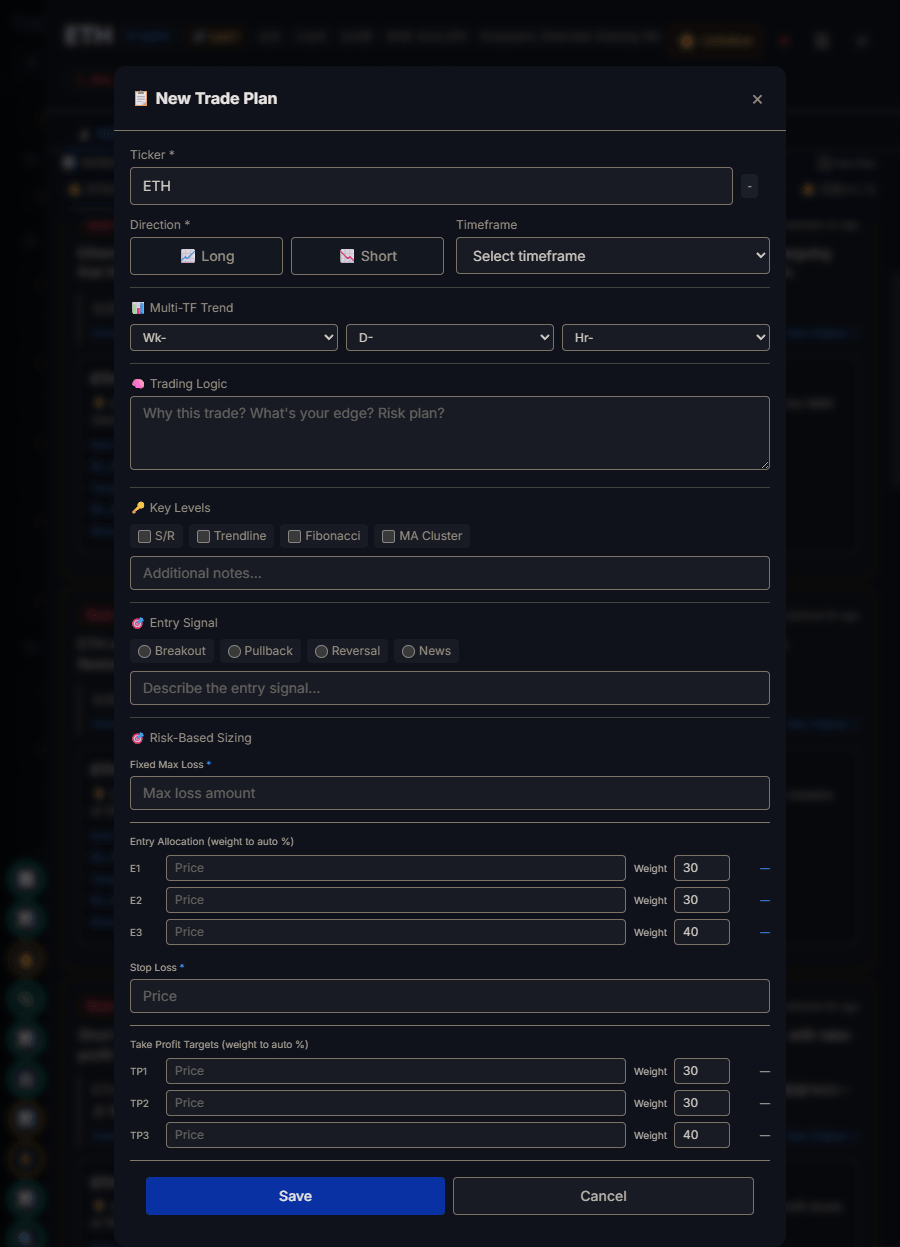
A clear trading plan keeps you disciplined and accountable.
Most traders lose money. Not because they have bad analysis — but because they trade without a plan.
A good trading plan is the single highest-leverage habit you can build. Yet most traders either skip it entirely or write a plan once and never look at it again.
In this guide, you'll learn how to make a trading plan step by step, with a downloadable template. Whether you trade crypto, stocks, or forex — the framework is the same.
1. Why a Trading Plan Matters (The Data)
Studies consistently show that traders who document their plans perform 30-50% better than those who don't. The reason isn't the plan itself — it's the discipline and accountability that comes from writing it down.
On TradeScope, we analyze 10,000+ trader viewpoints daily. The traders who consistently win — whether they're trading BTC, ETH, A-shares, or gold — all share one habit: they know their plan before they open a position.
A trading plan helps you:
- Avoid revenge trading — your plan tells you when to walk away
- Remove emotion — you made the decision before the market moved
- Track what works — without a plan, you can't review your trades objectively
- Scale what works — repeat your winning setups systematically
2. Step-by-Step: How to Build Your Trading Plan
Step 1: Define Your Market & Asset
Pick one market to focus on. The biggest mistake beginners make is trading everything — crypto, stocks, forex, futures. Instead:
- Choose 1-2 assets to master (e.g., BTC and ETH, or SPY and QQQ)
- Set your timeframes (e.g., daily chart for entries, 4H for exits)
- Follow trader sentiment for your chosen assets — see what top traders are saying in real time
Step 2: Set Your Entry Conditions
Be specific. "Buy if it looks good" is not a plan. Instead:
- Technical entry: "Buy BTC when it bounces off $60,000 support with RSI below 35"
- Sentiment-based entry: "Buy when bull/bear ratio drops below 0.8 and trader sentiment is overwhelmingly negative"
- News-based entry: "Buy after positive regulatory news confirmed by 2+ sources"
Step 3: Define Your Exit (Before You Enter)
Professional traders never enter a trade without knowing their exit. Define both:
- Take-profit: A specific price target. Example: "Sell 50% at $65,000, move stop to breakeven"
- Stop-loss: A specific price where you're wrong. Example: "Hard stop at $57,000"
Step 4: Set Position Size
This is the most underrated step. A good plan includes exactly how much you'll risk:
- Maximum 1-2% risk per trade (of your total capital)
- Position size = (account balance × risk %) ÷ (entry - stop loss)
- Never increase position size because you "feel confident"
Step 5: Review & Log Every Trade
This is where most traders fail. They close a trade and move on. Instead:
- Log your trade immediately after closing
- Compare outcome to your original plan
- Was the plan wrong, or did you deviate from the plan?
- Patterns over 20 trades tell you more than any single win or loss
3. Trading Plan Template
✏️ Copy this template for every trade:
| Asset: | ___________ |
| Direction: | ☐ Long / ☐ Short |
| Entry Price: | ___________ |
| Stop-Loss: | ___________ |
| Take-Profit: | ___________ |
| Position Size: | ___________ |
| Rationale: | ___________ |
| Trader Sentiment: | ☐ Bullish / ☐ Neutral / ☐ Bearish |
| Post-Trade Review: | ___________ |
Print this or save it as a note. Then, before every trade, fill it out. Within 20 trades, it'll be second nature.
4. 5 Common Trading Plan Mistakes
Even traders who have a plan mess up in predictable ways. Here's what we see from analyzing thousands of trader reviews on TradeScope:
- Plan is too vague — "Buy on a dip" isn't specific. What dip? How much of a dip? At what volume?
- No pre-trade checklist — You wouldn't fly a plane without a checklist. Why trade without one?
- Ignoring market sentiment — A great technical setup can fail if trader sentiment is overwhelmingly against you. Check what experienced traders are saying before you enter.
- Moving the stop-loss — The #1 habit of losing traders. Your plan said $57,000 stop. When it hits $57,000, you exit. Period.
- No post-trade review — Your trading plan is only as good as your ability to improve it. Review every trade, or you'll make the same mistakes again.
5. How TradeScope Keeps Your Plan on Every Asset
Most trading plans fail because they live in the wrong place. If your plan is in a Notion page organized by date, you won't see it when you're staring at a BTC chart at 2 AM deciding whether to buy.
TradeScope anchors your plan to the asset itself. When you open any asset on TradeScope, you see:
- Your trading plan for that asset — entry, target, stop, rationale
- Your past post-trade reviews — what worked, what didn't, all logged against the same asset
- Real-time trader sentiment — what thousands of traders are saying about this asset right now
- Bull/Bear distribution — see at a glance if the crowd is with you or against you
The result: your plan is visible at the moment of decision. That's when it matters most.
📊 Start Trading with a Plan
See real-time sentiment, build your trading plan, and review every trade — all on the same page.
Get Started Free →Related Reading
- Today's Market Sentiment Report — Live trader sentiment data for BTC, ETH, and top assets
- How to Find Trading Opportunities with TradeScope — Complete tutorial
- Understanding Trader Sentiment Indicators — Bull-bear ratio, divergence, and more
- Why TradeScope Exists — The problem we're solving
- Ultimate Guide to Trading Diary
- How to Start a Trading Diary
- 5 Best Trading Diary Apps